
Sebelum Insiden Terjadi: Bagaimana DevSecOps Cisometric Membangun Kesiapan SOC untuk Merespons Insiden
Pelajari bagaimana DevSecOps membantu membangun kesiapan SOC untuk merespons insiden melalui telemetry, akses, playbook, dan kontrol keamana...

Oleh Cisometric Marketing Team, Diterbitkan pada Oktober 28, 2025
The FIFA World Cup 2026 is still months away, but the cyber attack has already begun. While fans are busy planning trips and securing tickets, cybercriminals are doing the same, except their goal is not to celebrate football. It’s to exploit it.
Over 4,300 fake FIFA-related domains have been registered since August 2025, all mimicking official ticketing, streaming, and merchandise platforms (Check Point, 2025; Nairametrics, 2025).
These sites look convincing, complete with FIFA logos, host city names like Dallas or Toronto, and even official-looking SSL certificates. But behind the scenes, they’re traps for personal data, payment credentials, and digital access.
Some scammers are already preparing sites for FIFA 2030 and 2034, building long-term credibility through a technique called domain aging (Cybernews, 2025). In other words, while fans are counting down to 2026, hackers are planning for the next decade.
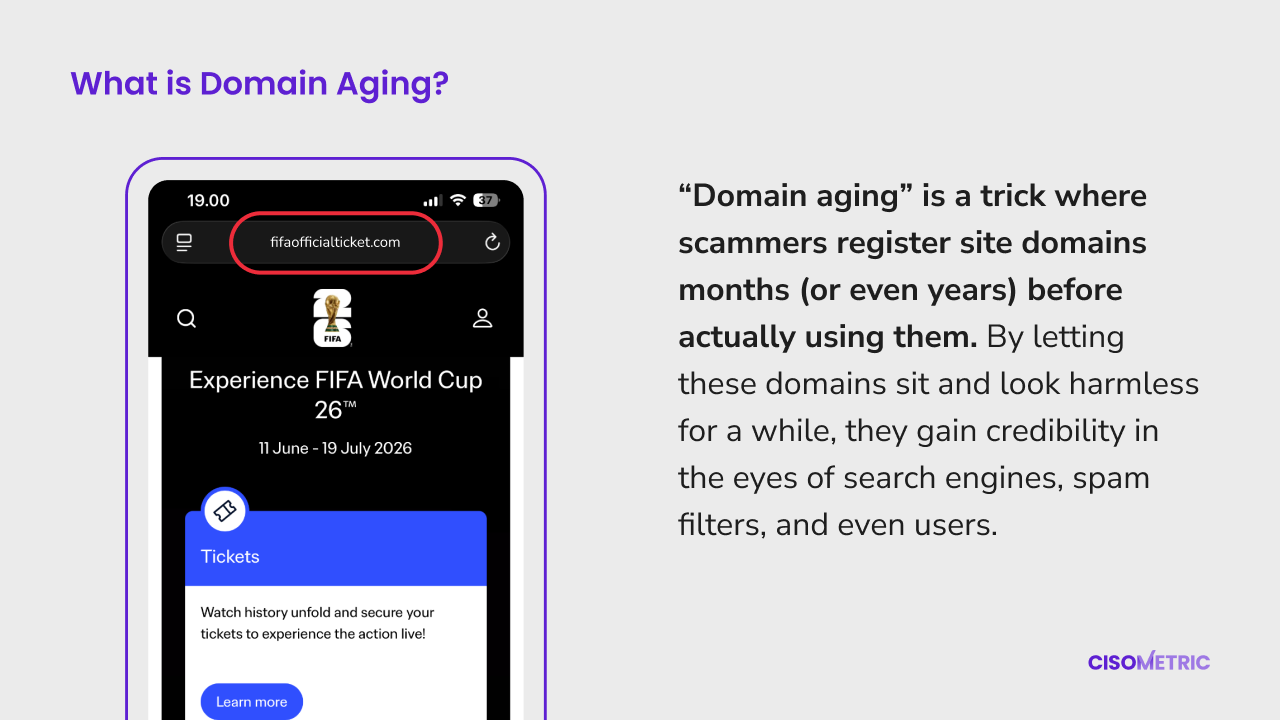
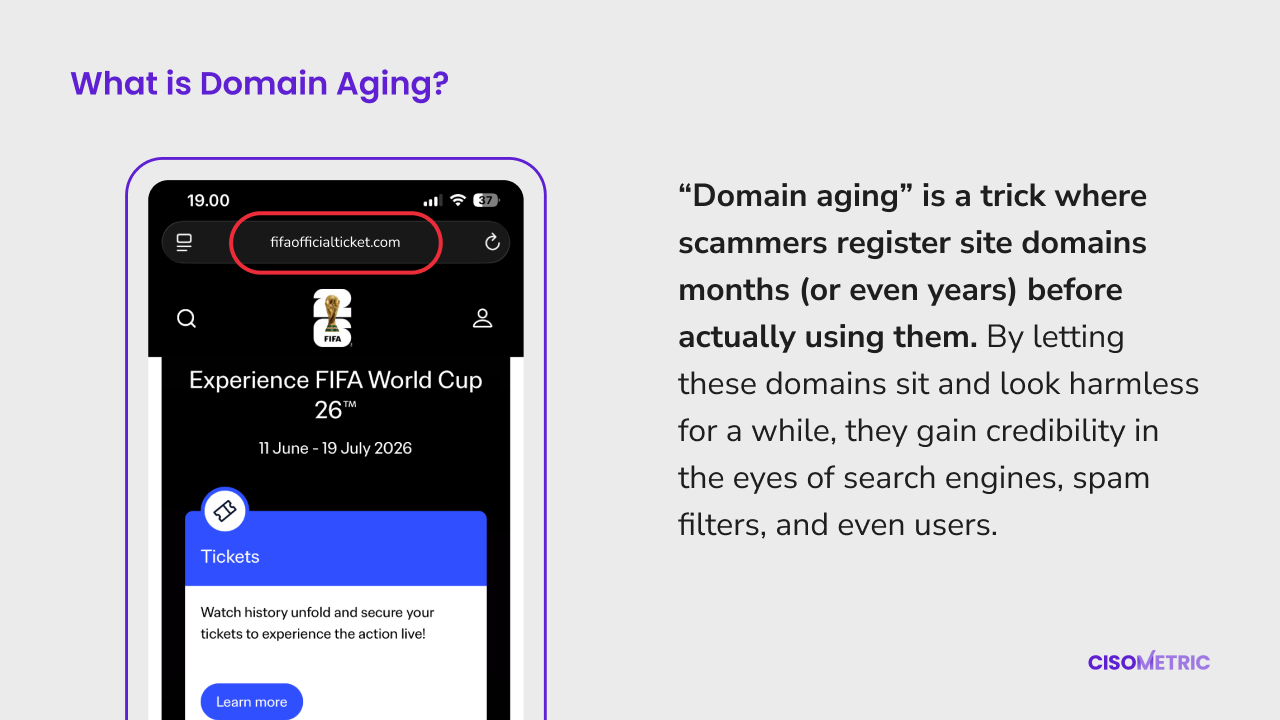
“Domain aging” is a trick where scammers register site domains months (or even years) before actually using them. By letting these domains sit and look harmless for a while, they gain credibility in the eyes of search engines, spam filters, and even users.
So when the time is right (like during the World Cup ticket presale) these “aged” domains suddenly turn into fake FIFA pages, phishing portals, or scam shops. It’s one of the reasons some attackers are already creating sites for World Cup 2030 and 2034 (Cybernews, 2025).
The idea is simple: the older the domain looks, the more trustworthy it appears.
The World Cup isn’t just a sporting event, it’s a global digital festival. Billions of people will go online to buy tickets, stream matches, and order merchandise. That’s a massive pool of potential victims.
Researchers from BforeAI’s PreCrime Labs found that many of these scam domains are strategically aged, SEO-optimized, and localized in multiple languages to appear trustworthy (The Review Hive, 2025). Some even outperform official FIFA sites in search results.
The most common scams so far (Mint, 2025; Tecnet One, 2025):
What’s striking is how synchronized these attacks are. The spikes in domain creation directly mirror FIFA’s official ticketing timeline like presales, announcements, and promotional phases (Nairametrics, 2025). It’s not a coincidence. It’s choreography.
Cybersecurity experts warn that scammers prey on excitement, the same emotion that makes football magical.
“When fans are caught up in the thrill of the event, they’re more likely to make rushed decisions,” said Mark Gorrie, Managing Director of Norton APAC (FutureFive, 2025).
These scams thrive on urgency. Tickets selling fast, limited access, final chances to get seats. But once a victim clicks “Buy Now,” the result could be stolen money, compromised data, or malware infection.
During the Qatar 2022 tournament, similar scams led to millions in losses worldwide. But now, with AI and automation, the scale and sophistication have grown exponentially. Fraudsters can create hundreds of fake sites in minutes, adapt them to different languages, and distribute them across Telegram, WhatsApp, and social media platforms (Tecnet One, 2025).
Organized Fraud Networks
This is an organized cybercrime. Investigations show coordinated patterns across registrars like GoDaddy, Namecheap, Dynadot, and Gname, often using identical DNS setups and shared templates (Mint, 2025).
On dark web forums, fraud kits branded with “FIFA 2026” are already circulating, offering pre-made ticket portals, email phishing templates, and botnet access. Some even advertise “guaranteed conversion” language that sounds like marketing, not crime (Check Point, 2025).
This shows how cybercrime has industrialized. Each scam is part of a larger supply chain of stolen data, fake domains, and automated attacks.
The best defense is awareness. Here are simple ways to protect yourself before kickoff:
1. Stick to official FIFA channels. Bookmark fifa.com and avoid links from messages or ads.
2. Double-check URLs. Fake domains often use slight misspellings (like fifaworldcup2026.shop).
Also read: Tips to Avoid Scam Websites
3. Avoid too good to be true offers. Free streams or VIP deals are common lures.
4. Use credit cards, not transfers. Fraud protection makes disputes easier.
5. Enable 2FA. Add a layer of security to your accounts, but avoid SMS-only codes when possible.
Also read: Protect Your Accounts with 2FA – It's Easier Than You Think!
What Businesses Should Know
The scams don’t stop with fans. FIFA partners, hospitality brands, travel companies, and sponsors are also being impersonated, sometimes before their campaigns even launch.
To protect customers and reputation:
Also read: Phishing: New Methods and How to Stay Safe
For organizations, having a Security Operations Center (SOC) and Computer Security Incident Response Team (CSIRT) in place ensures that suspicious activity (from spoofed domains to fake customer support pages) can be detected and contained early.
Also read: Important Update! New Presidential Directive for CSIRT Capabilities ; How Cisometric’s SOC Protected Businesses from Hundreds of Cyber Threats
The 2026 FIFA World Cup will bring unforgettable goals and moments, but it will also be one of the most targeted digital events in history. Cybercriminals have already shown their playbook by impersonation, timing, and trust exploitation.
As Check Point’s Amit Weigman put it, “Cyber attackers are not waiting for 2026; they’re matching their timeline to FIFA’s” (Mint, 2025).
For fans and businesses alike, this is the moment to stay alert.
If your organization wants to strengthen its defenses before the next wave of scams hits, our experts at Cisometric can help. From phishing detection and brand impersonation monitoring to SOC and CSIRT response capabilities, we provide end-to-end protection that keeps your digital ecosystem safe.
Schedule a free consultation with our cybersecurity team today to see how we can help secure your organization, click here.
For more updates on digital scams, cybersecurity insights, and expert tips, follow our social media:
LinkedIn: Cisometric
Instagram: @cisometric
Youtube: @Cisometric
Reference:
The Dark Side of the 2026 World Cup: Cybercriminals and Fake Domains
FIFA World Cup 2026 Scams: Hundreds of Malicious Domains Target Fans and Businesses
Fans warned of digital scams ahead of 2026 World Cup matches
Cybercriminals preparing for scam bonanza ahead of FIFA World Cup 2026
Fraudsters register 4,300 FIFA World Cup 2026 domains to scam fans
FIFA 2026 targeted by cybercriminals: Experts warn of ticket fraud, bot attacks and brand abuse
Pelajari bagaimana DevSecOps membantu membangun kesiapan SOC untuk merespons insiden melalui telemetry, akses, playbook, dan kontrol keamana...

Bagaimana ancaman berbasis AI mengubah operasional SOC? Simak perkembangan terbaru dan kapabilitas deteksi, investigasi, serta respons yang...

Panduan teknis CTI: 3 tingkatan CTI, klasifikasi stealer logs vs combolists, Scattered Spider help desk bypass, IMDS cloud, dan kepatuhan UU...
Cari Artikel Berdasarkan Kategori
Kami menggunakan cookie untuk meningkatkan pengalaman menjelajah, menganalisis lalu lintas situs, dan menyajikan konten yang relevan. Pilih cookie mana yang Anda izinkan. Kebijakan Privasi